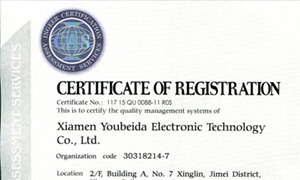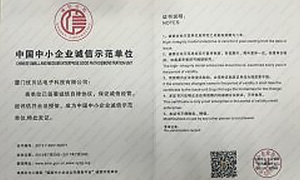




Ubeida got the ISO9001 certificated
In 2015, we got the ISO9001:2008 certificated.We have strict quality management system, which will help us improve the product quality and perfect the production management.
Unclear, muffled, and distorted microphone audio is a prevalent technical defect that impairs user experience in online conferences, professional voice communication, live streaming, and interactive gaming scenarios. Degraded microphone clarity frequently results in incomplete information transmission, frequent communication obstacles, and reduced operational efficiency. Most audio quality deterioration originates from environmental acoustic interference, hardware anomalies, unstable wireless transmission, and improper system audio configuration, all of which can be accurately diagnosed and eliminated via standardized troubleshooting procedures.

Environmental acoustic interference constitutes the primary factor undermining microphone pickup performance. Complex ambient disturbances, including airflow friction, mechanical vibration from electrical equipment, indoor reverberation, and surrounding background chatter, overlap with the fundamental frequency band of human voices. Such frequency superposition triggers signal aliasing, weakens valid voice waveforms, and produces blurred and fluctuating audio output. Moreover, prolonged device usage causes the buildup of dust, sweat grease, and fine impurities on the microphone grille. These blockages hinder acoustic conduction, lower sensor pickup sensitivity, and eliminate high-frequency voice details, ultimately leading to dull, muffled, and low-fidelity audio recording.
Hardware flaws and unstable connection statuses further exacerbate audio distortion. For wired headsets, frequent plugging and unplugging often cause interface oxidation, poor contact, and internal circuit aging, generating intermittent audio dropout, current noise, and voice distortion. For Bluetooth headsets, adjacent Wi-Fi signals and other wireless devices induce spectrum interference, resulting in unstable pairing, data frame loss, and transmission jitter during audio delivery. Additionally, insufficient battery voltage undermines the operational stability of the microphone sensor module, significantly degrading real-time voice acquisition performance.
Unoptimized system configurations and software anomalies are another critical cause of poor audio fidelity. Improper microphone gain setting either weakens voice pickup intensity or causes signal overflow and waveform distortion. Deactivated environmental noise cancellation (ENC) and echo cancellation functions fail to suppress redundant ambient noise. Outdated or corrupted audio drivers are incapable of precise signal encoding and decoding, triggering persistent white noise and inconsistent voice output.
A set of targeted measures can effectively optimize microphone performance. Users are advised to operate devices in low-noise environments and conduct regular cleaning of microphone grilles to remove accumulated impurities. Routine inspection of wired interfaces and re-pairing of Bluetooth devices help stabilize audio signal transmission. Calibrating microphone gain, enabling professional noise reduction algorithms, and updating audio drivers substantially enhance voice pickup clarity and stability.
In summary, most microphone audio faults derive from external interference and inappropriate software configuration rather than irreversible hardware damage. Scientific routine maintenance and standardized parameter calibration can effectively restore high-fidelity voice transmission, ensuring stable and high-quality professional audio communication.