




Ubeida got the ISO9001 certificated
In 2015, we got the ISO9001:2008 certificated.We have strict quality management system, which will help us improve the product quality and perfect the production management.
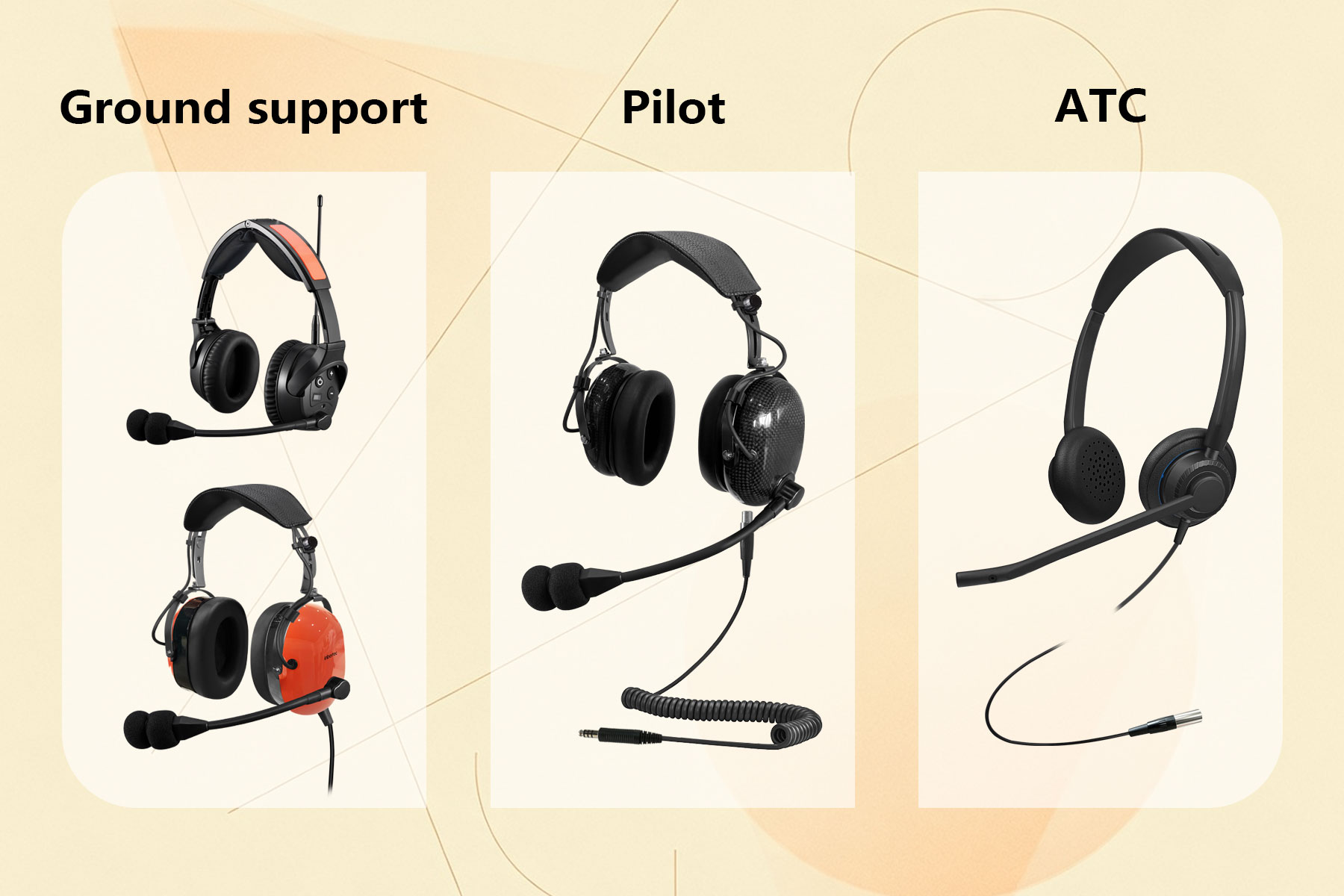
What Is an Aviation Headset?
An aviation headset is a communication headset designed for aviation environments where clear voice transmission, noise reduction, and reliable communication are important. Unlike general-purpose headphones, aviation headsets are designed around specific operational environments, including aircraft cockpits, airport ground operations, and air traffic control facilities.
Depending on the application, aviation headsets can be divided into three common categories: ground support headsets, pilot headsets, and ATC headsets.
Each type is designed for a different aviation communication scenario.
1. What Is a Ground Support Headset?
A ground support headset is designed for personnel working around aircraft on the airport ramp, including pushback, deicing, ground maintenance, and other ground operations.
Ground crews often work around aircraft engines, vehicles, and other high-noise equipment. A ground support headset therefore needs to provide clear communication while helping reduce surrounding noise.
Ground support headsets can be wired or wireless. Wireless systems can provide hands-free communication and allow personnel to move around the aircraft without being restricted by a cable. Inbertec, for example, offers wired and wireless ground support communication solutions for pushback, deicing, and ground maintenance operations.
Typical applications include:
Aircraft pushback
Deicing operations
Ground maintenance
Ramp operations
Vehicle and equipment coordination
2. What Is a Pilot Headset?
A pilot headset is designed for communication between pilots, air traffic controllers, and other aviation communication systems during flight operations.
Pilot headsets are commonly designed with features such as passive noise reduction, noise-cancelling microphones, comfortable ear cushions, and aviation-specific connectors.
Different aircraft require different headset connections. For example, Inbertec offers fixed-wing pilot headsets with dual GA plugs and helicopter headsets with U174/U connectors.
A pilot headset should provide clear radio communication while remaining comfortable during extended flight periods.
3. What Is an ATC Headset?
An ATC headset is designed for air traffic control communication. Air traffic controllers use voice communication systems to communicate with pilots and coordinate with other ground-based aviation facilities. The FAA describes voice communication systems as interfaces that connect controllers with pilots and other ground users.
ATC headsets are typically designed for:
Clear speech transmission
Noise reduction
Comfortable long-term wearing
Push-to-talk communication
Compatibility with ATC communication systems
Because controllers may wear headsets for extended shifts, comfort and reliable voice communication are important considerations. Inbertec's ATC communication solution is designed around clear audio, noise reduction, comfort, and push-to-talk functionality.
4.How Are Ground Support, Pilot, and ATC Headsets Different?
|
Headset Type |
Main Users |
Typical Applications |
Key Considerations |
|
Ground Support Headset |
Ground crew, ramp agents, maintenance personnel |
Pushback, deicing, ground maintenance |
Noise reduction, durability, wired/wireless communication |
|
Pilot Headset |
Pilots |
Fixed-wing and helicopter operations |
Clear radio communication, comfort, noise reduction, connector compatibility |
|
ATC Headset |
Air traffic controllers |
Tower, approach, center and other ATC environments |
Clear speech, long-term comfort, PTT, system compatibility |
The important point is that there is no single aviation headset for every aviation application. The right headset depends on the user's role, operating environment, communication system, and required connector or interface.
5.How Do You Choose the Right Aviation Headset?
Start with the application.
For airport ramp operations, a ground support headset is generally the relevant category. For cockpit communication, choose a pilot headset compatible with the aircraft's communication system. For air traffic control operations, an ATC headset should be selected according to the facility's communication system and operational requirements.
Other factors to consider include:
Noise reduction
Microphone performance
Wearing comfort
Durability
Connectivity
Wired or wireless operation
Push-to-talk functionality
6.Inbertec Aviation Headsets
Inbertec provides aviation communication solutions covering ground support, pilot, and ATC applications. Its aviation headset portfolio includes wired and wireless ground support headsets, fixed-wing and helicopter pilot headsets, and ATC communication solutions.
From pushback and deicing on the ramp to pilot communication in the cockpit and ATC operations, Inbertec develops headset solutions for different aviation communication environments.